Best suited to
Retail, offices, showrooms, hospitality and public buildings.
Concrete polishing / Commercial
Refined concrete floors balancing architectural character, long-term performance and simple day-to-day care.
The right system
Commercial polishing suits customer-facing and workplace floors where the structural slab can also be the visible finish. The method avoids a separate floor covering, but the slab must be designed or assessed with appearance in mind.
Agree a representative sample under the actual lighting and include perimeter details, thresholds, penetrations and anticipated repairs. Fit-out sequencing and temporary protection are as important as the final polishing pass.
Retail, offices, showrooms, hospitality and public buildings.
A distinctive natural floor with controlled aggregate exposure and sheen.
customer-facing commercial interiors.
Technical overview
Commercial concrete polishing uses controlled grinding and refinement to create an architectural floor from the concrete slab. Exposure, sheen, repairs and natural tonal movement must be agreed as part of the design language.
retail, offices, showrooms and public interiors seeking a durable, authentic material finish.
sample expectations, aggregate exposure, edge details, floor penetrations, staining risk and lighting conditions.
Aggregate exposure and sheen are separate choices. A mock-up should show likely tonal variation, repairs and edge treatment.
Use neutral cleaning chemistry, suitable auto-scrubber pads and prompt spill removal. Periodic burnishing or guard renewal depends on traffic and the specified finish.
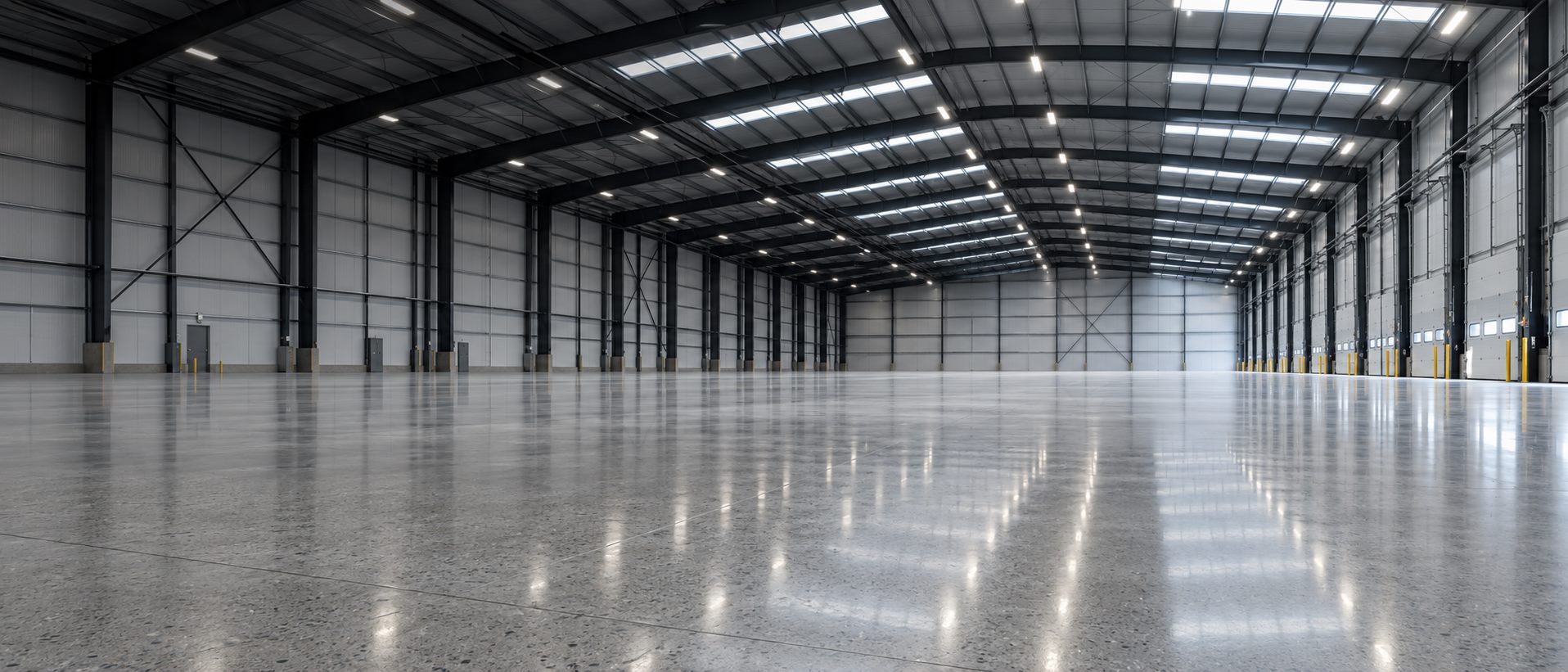
Polished screed provides greater visual control when the base slab is unsuitable or was not designed to be seen.
Specification framework
Record strength, flatness, cracks, joints, historic coatings, contamination and repairs before selecting the cut.
Agree aggregate exposure and sheen separately, with a representative trial including edges and repaired areas.
Describe wheeled and pedestrian traffic, spill exposure, slip considerations and required cleaning methods.
Allow for dust management, phased access, sample approval, protection and handover cleaning.
Delivery method
Condition, flatness, contamination, repairs, access and programme constraints are recorded.
Appearance, performance and realistic slab variation are agreed before full installation.
Our specialist team manages preparation, finishing, protection and handover.
Specification questions
No. Concrete is a site-made material, so tone and aggregate exposure vary. A sample and agreed acceptance criteria are more useful than relying on a small photograph.
No. Densifiers and protective treatments can improve cleanability, but concrete remains a porous material. Spill response and maintenance still matter.
Use the cleaning method and chemistry agreed for the finish; avoid aggressive products and abrasive pads that can damage protection or reduce sheen.
Completed Ecoflor projects
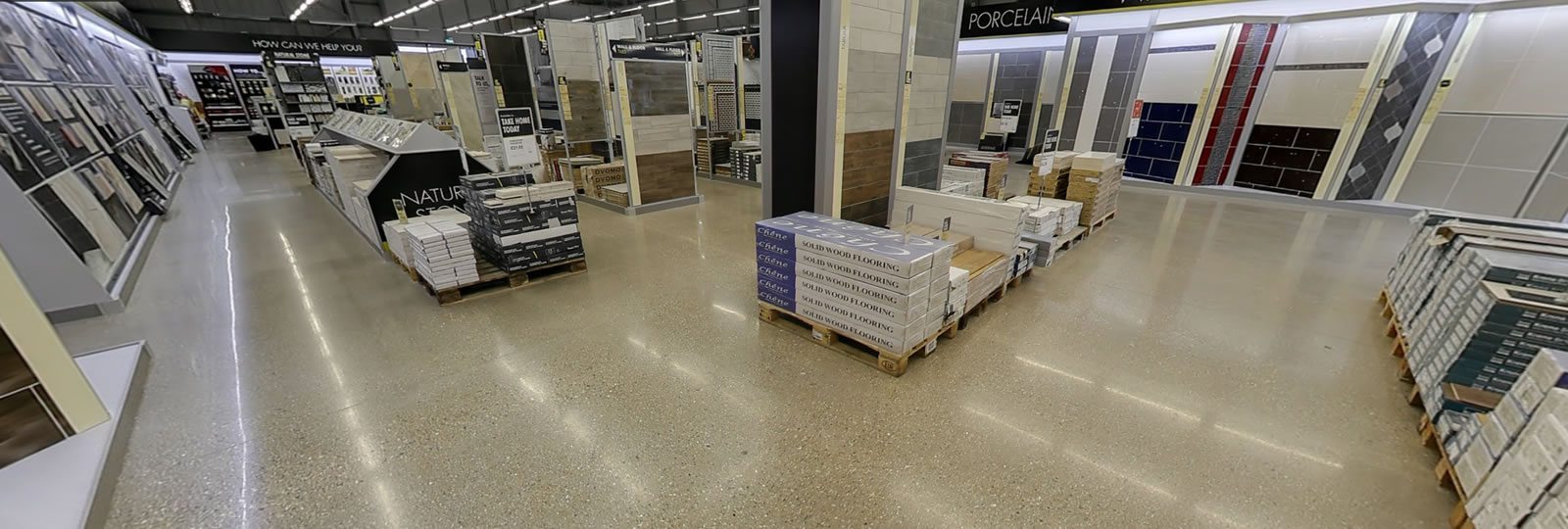
Retail refurbishment · 600 m²
An existing warehouse and office slab prepared and diamond polished for a 600 m² retail store.
View project ↗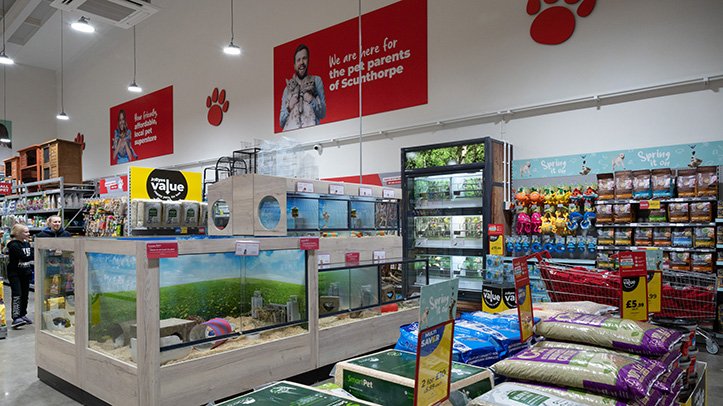
Retail refurbishment · 600 m² · 8 days
Adhesive removal, densification and a seven-stage polishing process for a 600 m² retail floor, completed in eight days.
View project ↗Start a conversation
Send the location, approximate area, construction stage, intended use and programme. Include plans or photographs if available; we can then discuss the most suitable next step.